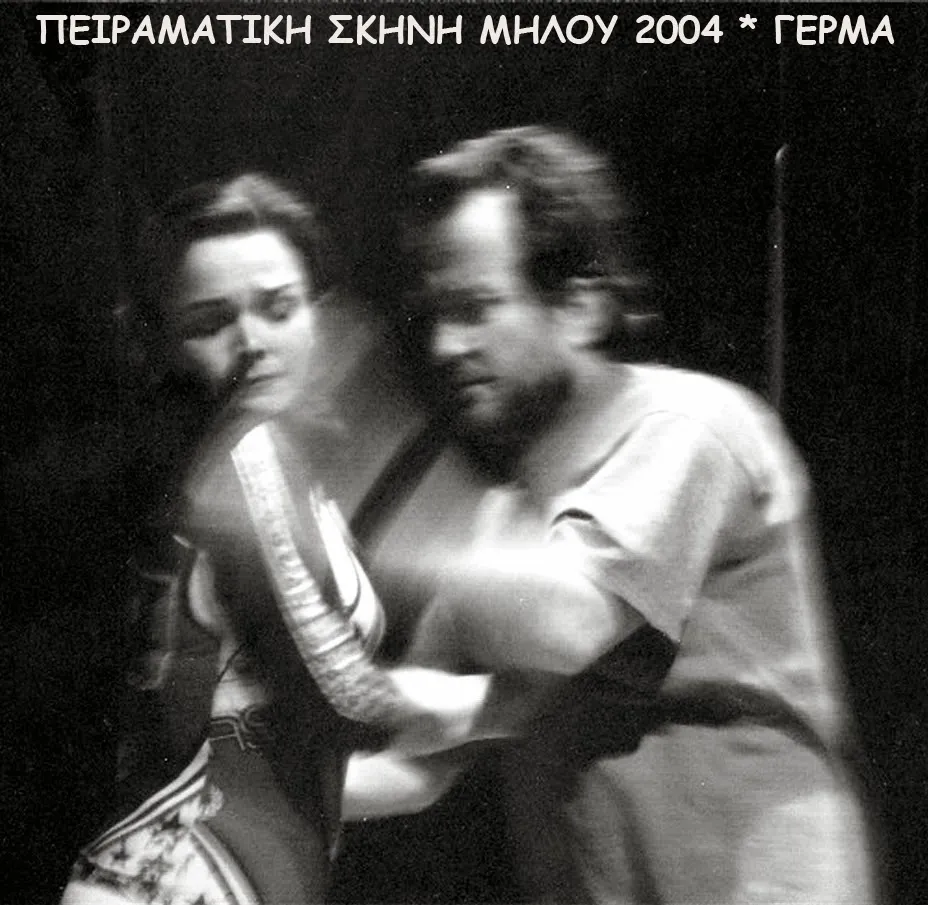
Because it is a play of the people. Through this work, too, Federico García Lorca shows us how theatre can belong to the people and reach a wide audience. He starts from real life to build his poetic chariot. In his own words: “In this dramatic theatre of the world, the artist must weep and laugh with his people. He must leave the branch of lilies and wade waist-deep into the mud to help those who are looking for the lilies… Human suffering and the constant injustice that reigns in the world prevent me from moving my house to the stars.”
That is Lorca, and that is “Yerma”: made from the materials of the earth. It speaks of the world of the village, bound to the land. It speaks the villagers’ words and turns them into poetry: a blend of matter and poetry suffused with the most generous and sincere love of life. A life that, along with its beauty, also holds destruction and loss. A hard and deprived life, like that of the shepherds and farmers it describes, the life many people on earth still live today. It is here in Milos too, among us. We live it today, but our fathers and grandfathers lived it far more.
“Yerma”, then, which means barren land, as a statement about life, when the unbreakable condition of all life is fertility. Yerma, a woman of the plains, is denied motherhood. She is denied the chance to see her child carry life forward and do what she was denied, living without love, since her husband is devoted only to his fields. He struggles for the fertility of his fields; his “livelihood”, his property, is his life. Alienation, a hard life full of deprivation. And with all this, the “must”: the notion of honour, the “clean brow”, as a check on the desire for life, a cancelling of erotic desire, a denial of our right to self-determination. “Honour”, always defined by society, by others, who live inside us through their words and their eyes.
“Yerma”, then, as a love of life. A life whose denial leads to death as the only resolution of the drama. A superb continuation of ancient Greek tragedy!
For all these reasons and many more, we chose “Yerma”.
We brought her to Milos, because she lives here too.
Credits
| Translation | Jenny Mastoraki |
| Direction | Vasilis Kontaxis |
| Associate director | Vasileia Kontelli |
| Music | Geras. Triantafyllou |
| Lyrics adaptation | Vasilis Kontaxis |
| Sets & costumes | the company |
| Lighting | Kostas Galanis, Zacharoula Ioannou |
| Lighting | Giannis Chrysoulis |
| Sound | Andreas Kelaidinos, Christos Damoulakis |
| Costumes | Despoina Koliaraki |
| Poster | Gian. Maragkoudakis |
Puppets made by Giannis Giannoulis
Cast (in order of appearance)
Yerma Moschoula Mavrogianni
Juan Giorgos Mallis
Maria Ioulia Karagianni
Victor Nikos Vichos
Old woman A Avra Valsamanidou
1st girl: Manti Lykeridou – Veleta
2nd girl: Antonia Ventouri
1st washerwoman: Katerina Berdologou
2nd washerwoman: Maria Korogiannou
3rd washerwoman: Maria Chintiraki
4th washerwoman: Katerina Androulidaki
1st sister-in-law: Anezina Vamvouni
2nd sister-in-law: Katerina Sianou
Dolores Mantalena Tsironi
Old woman V Mairi Vamvakari
Village fair:
Puppeteer Thodoris Bezaintes
man A Christos Kolovos
man V Kostas Bousounis
Children: Katerina Chintiraki,
Anna Salamaleki,
Antonis Manzi
Manolis Chrysoulis
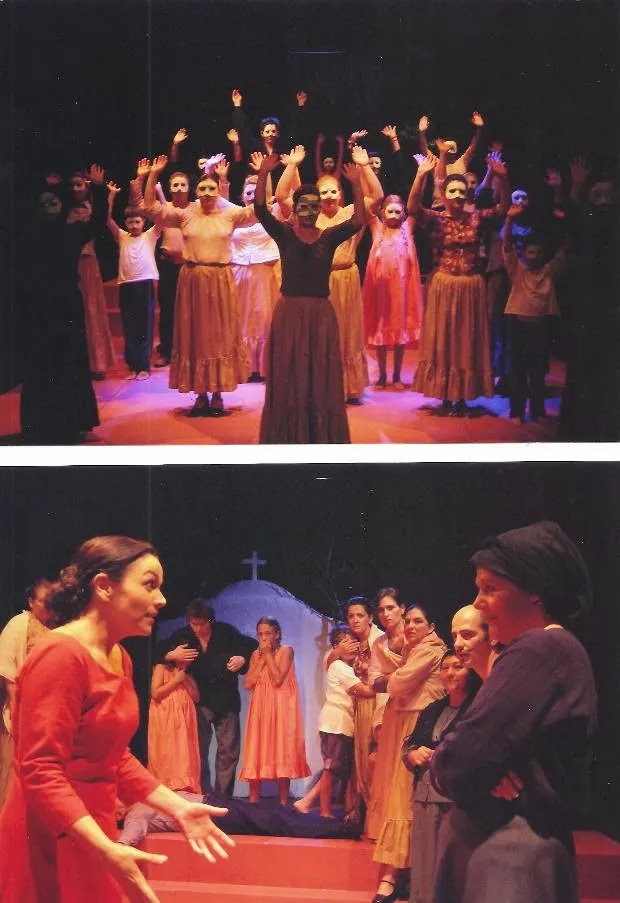
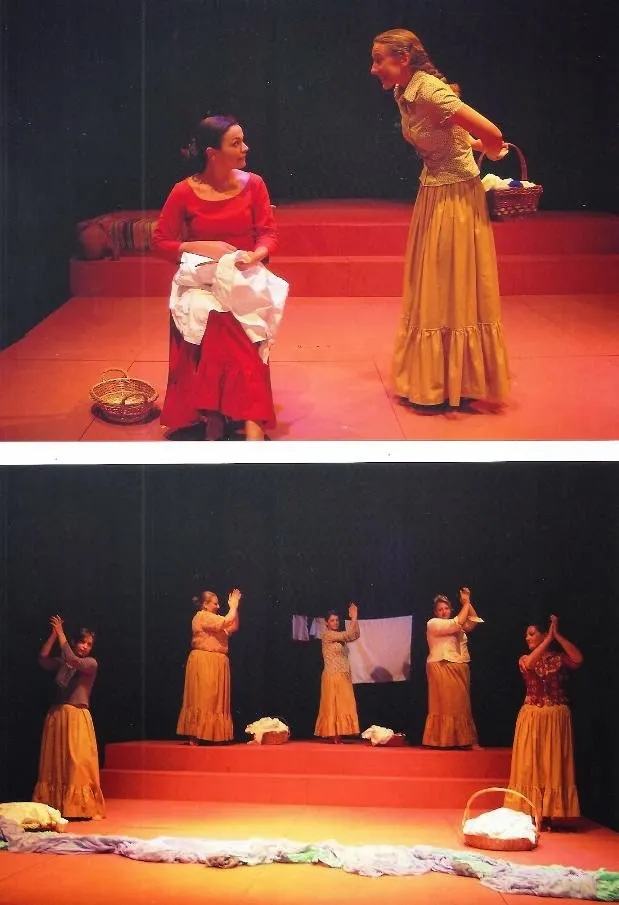
A superb production of Lorca’s “Yerma” by the Milos Experimental Stage. On a remodelled, much larger stage at the Adamas Cultural Centre, with an excellent if simple set, a spare directing style that brings out the poetry of the play, excellent movement and very good acting, and wonderful music written especially for the play, we enjoyed a deeply moving performance. It deserves to be seen by all of us and deserves to represent our island elsewhere. Our only remark: the new, lower stage makes tiered seating in the auditorium necessary, as otherwise those at the back cannot see the action on stage well. (Foni tis Milou newspaper)